
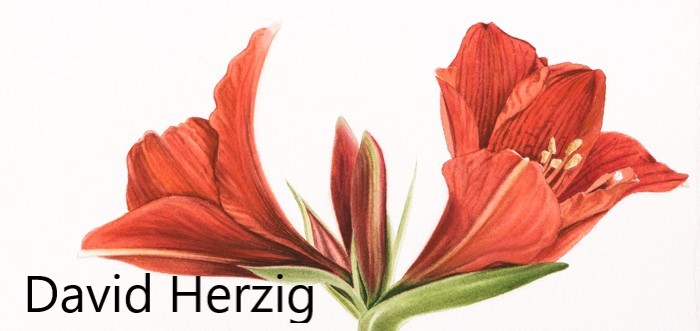



| David
Herzig recently won an award at the 81st National
Midyear Exhibition at the Butler Institute of American
Art in Youngstown, Ohio. His transparent water Iris
Ascending is the award winner! |
| David Herzig is
certainly one of the best artists of floral images
working today as evidenced by these magnificent
examples, each now on display in the high-ceiling east
gallery here at Saper Galleries. For more detail on the artist click here for a four-page bio in PDF format. Click here for a one-page summary on David Herzig and his art. If you would like a special commission of your favorite flower, we can make it happen for you! Enjoy the several new watercolors that David just brought to us! |
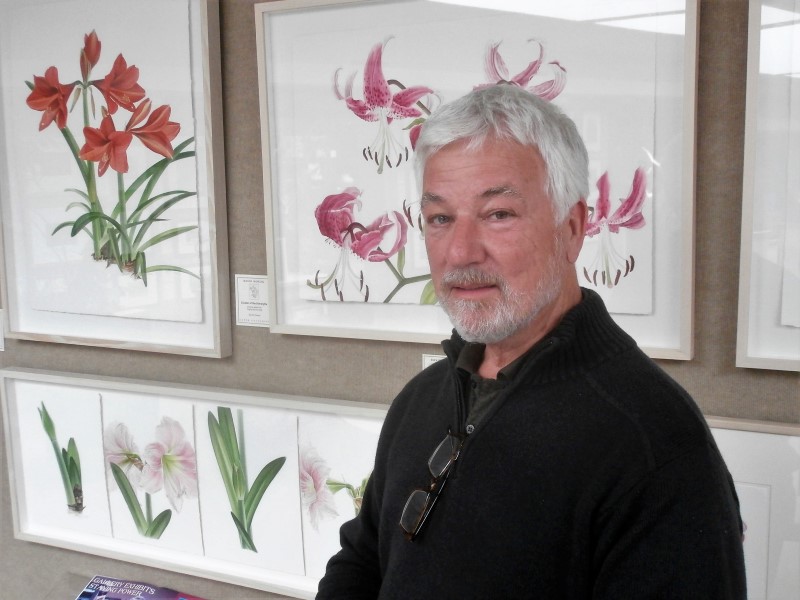 Artist David Herzig in the west
gallery, 2021
|
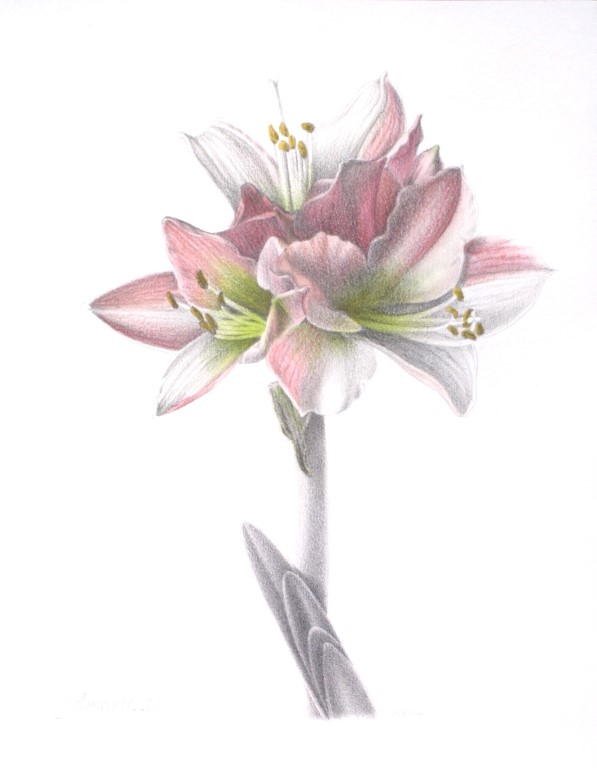 Amaryllis, Apple Blossom Original watercolor with graphite Image size: 14 x 11" Framed size: 20 x 16" Sorry, sold for $1,200 framed |
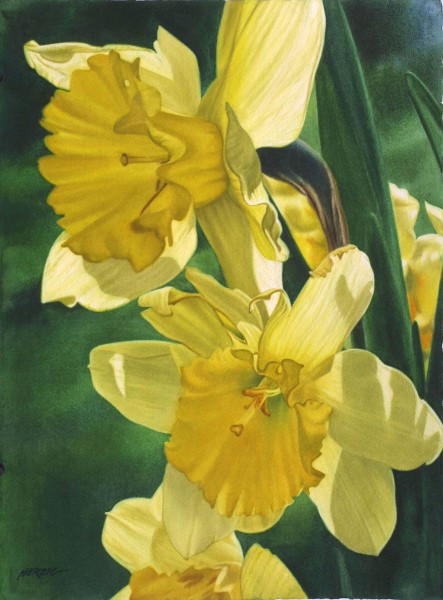 Dappled Daffodils Original watercolor Image size: 30 x 22" Framed size: 42 x 34" Sorry, sold for $3,400 framed |
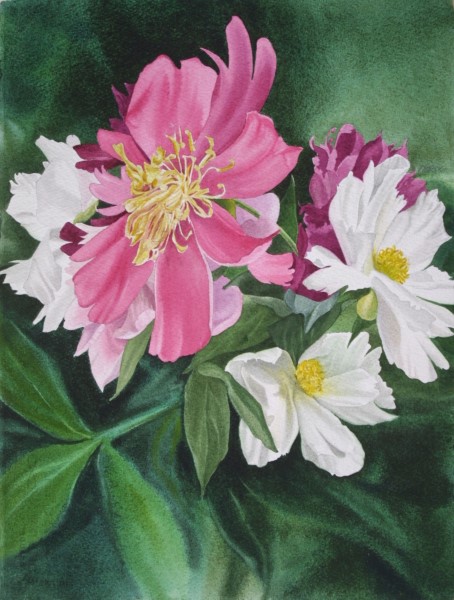 Mixed Peonies < New! Original watercolor Image size: 15 x 11 1/4" Framed size: 20 x 16" $850 framed |
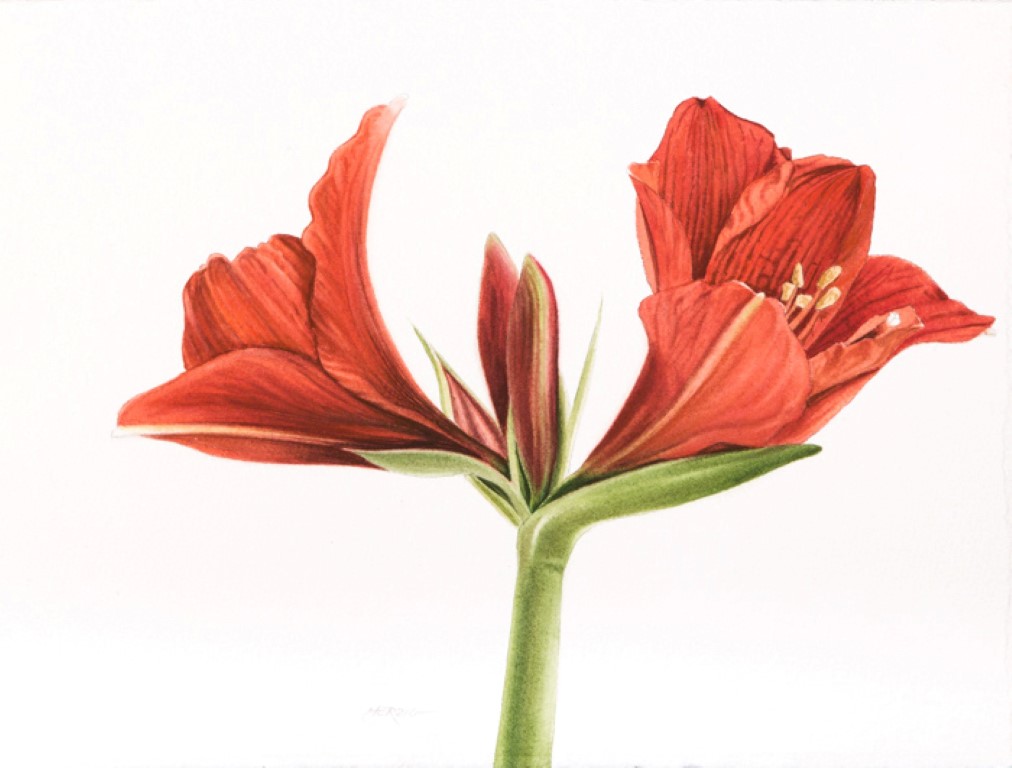 Orange Amaryllis, Upwards < New! Original watercolor Image size: 11 1/4 x 15" Framed size: 16 x 20" $850 framed |
 Pink Amaryllis, Ava < New! Original watercolor Image size: 22 1/2 x 30" Framed size: 28 x 36" $2,200 framed |
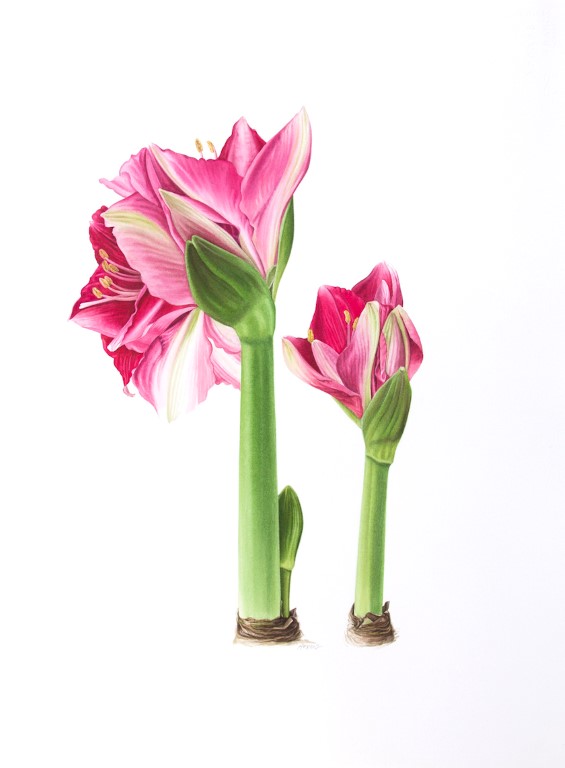 Side-by-Side, Hot Pink Amaryllis Original watercolor Image size: 30 x 22 1/2" Framed size: 36 x 28" Sorry, sold for $2,200 framed |
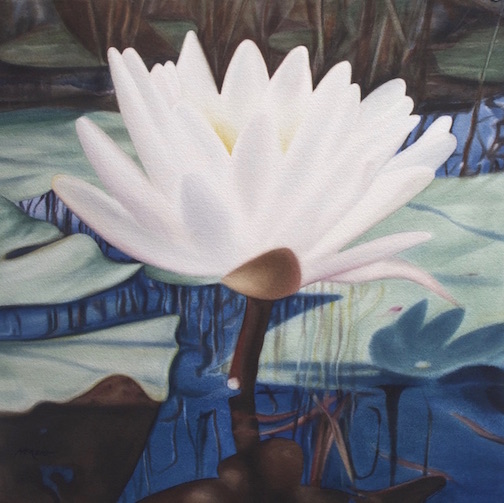 Aquatic Portrait III < New! Original watercolor Image size: 22 1/2 x 22 1/2" Framed size: 30 x 30" $2,400 framed |
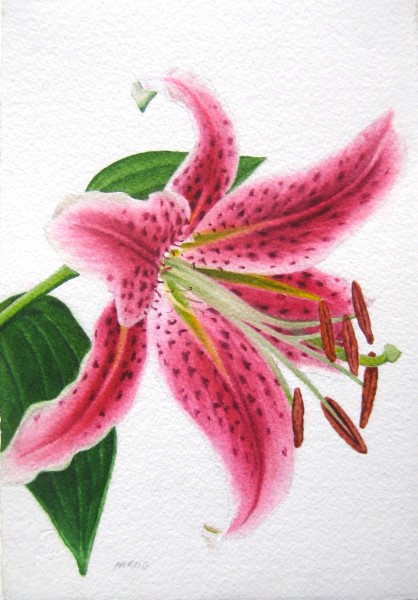 Stargazer II Original watercolor Image size: 11 1/4 x 7 1/2" Framed size: 20 x 16" Sorry, sold for $550 framed |
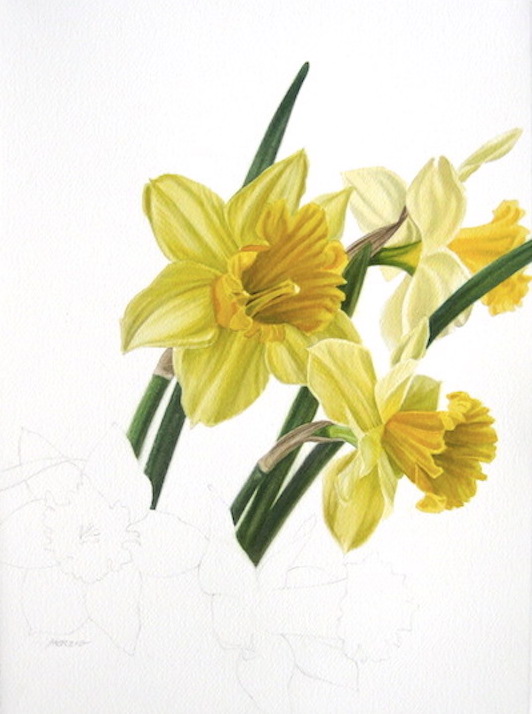 Daffodils I Original watercolor with graphite Image size: 15 x 11 1/4" Framed size: 20 x 16" $850 framed |
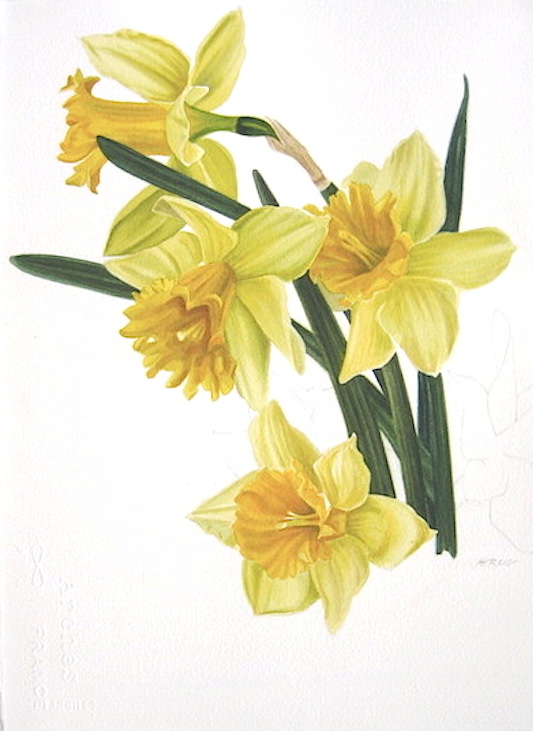 Daffodils II Original watercolor with graphite Image size: 15 x 11 1/4" Framed size: 20 x 16" $850 framed |
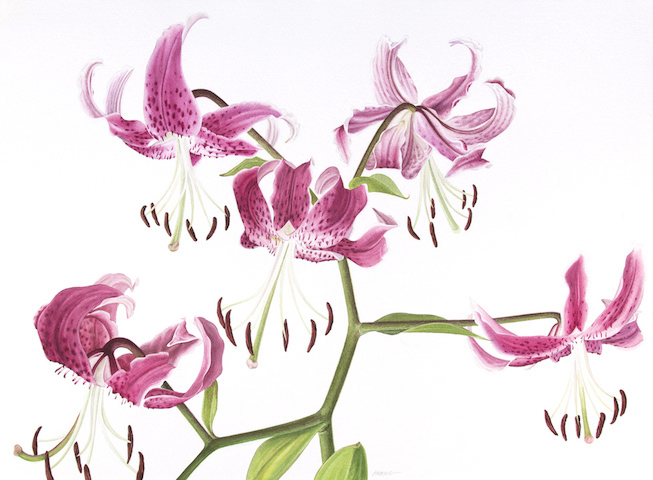 Rubrum Rain (Oriental Lily) Original watercolor Image size: 22 1/2 x 30" Framed size: 28 x 36" Sorry, sold for $2,200 framed |
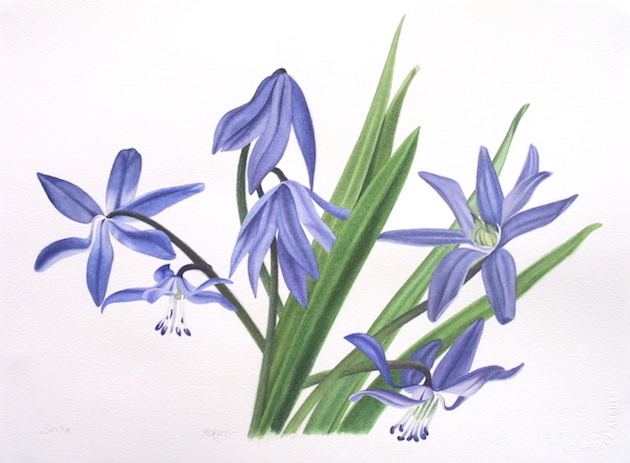 Scilla Original watercolor Image size:11 1/4 x 15" Framed size: 16 x 20" $850 framed |
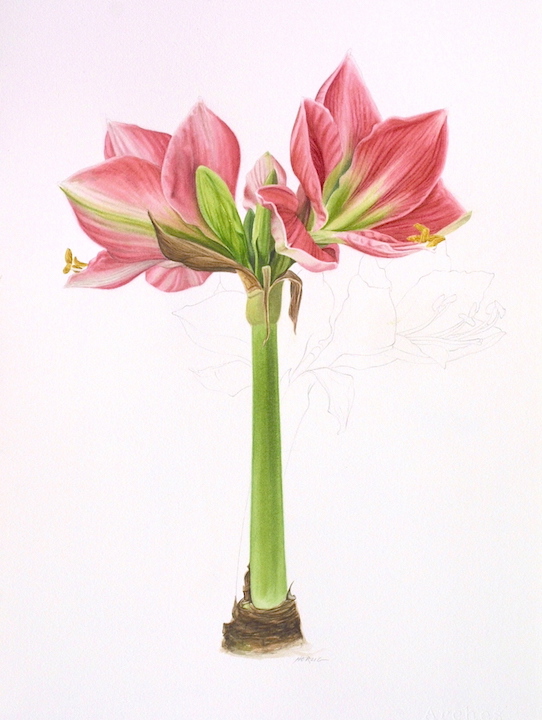 Pink Amaryllis, Two Stems Original watercolor Image size: 22 1/2 x 15" Framed size: 28 x 21" $1,100 framed |
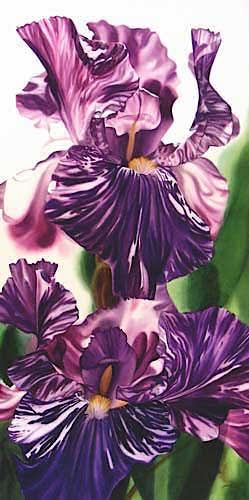 Batik (Iris) Original watercolor Image size: 40 x 20" Framed size: 45 x 24" Sorry, sold for $2,800 framed |
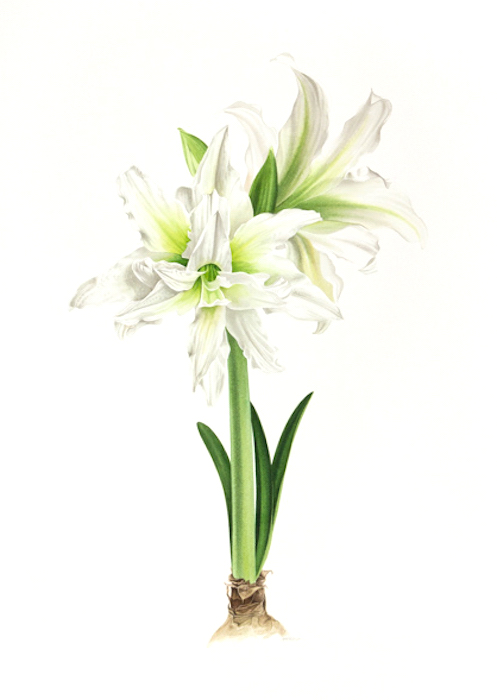 Lucy's White, Amaryllis Original watercolor Image size: 30 x 22 1/2" Framed size: 36 x 28" Sorry, sold for $2,200 framed |
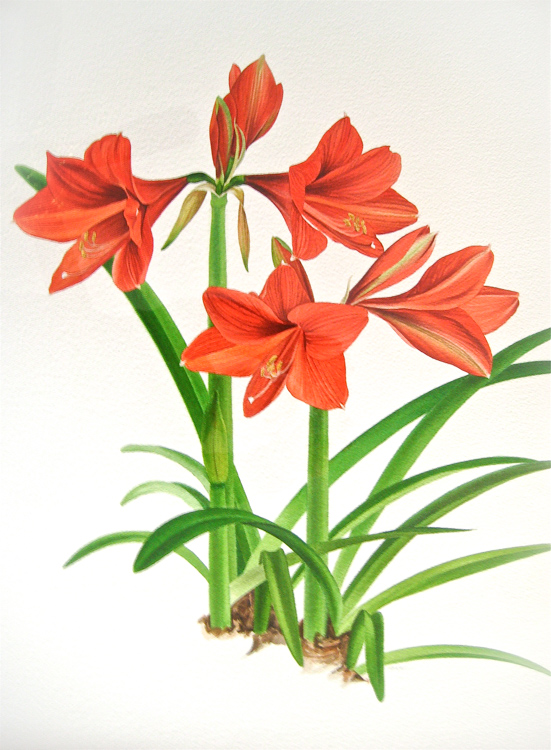 Cluster of Red Amaryllis Original watercolor Image size: 30 x 22 1/2" Framed size: 35 x 27" $2,200 in white-washed ash frame |
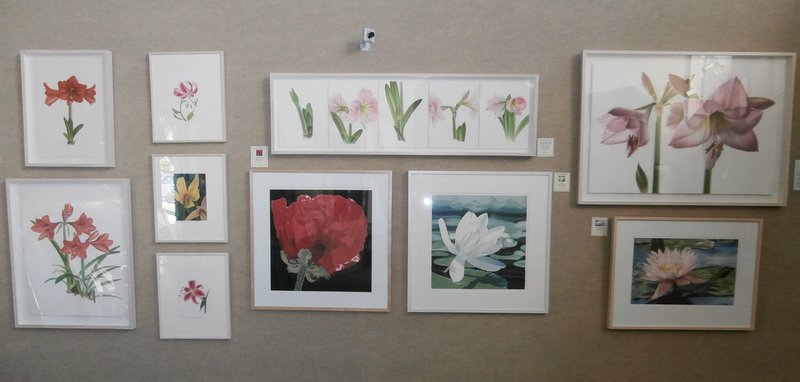
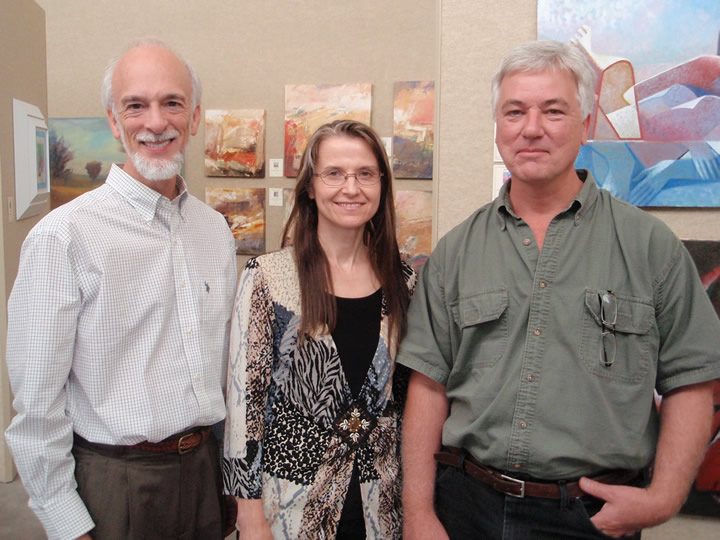 Gallery owner Roy Saper, framing manager Jennifer Cuthbert, and artist David Herzig at Saper Galleries |
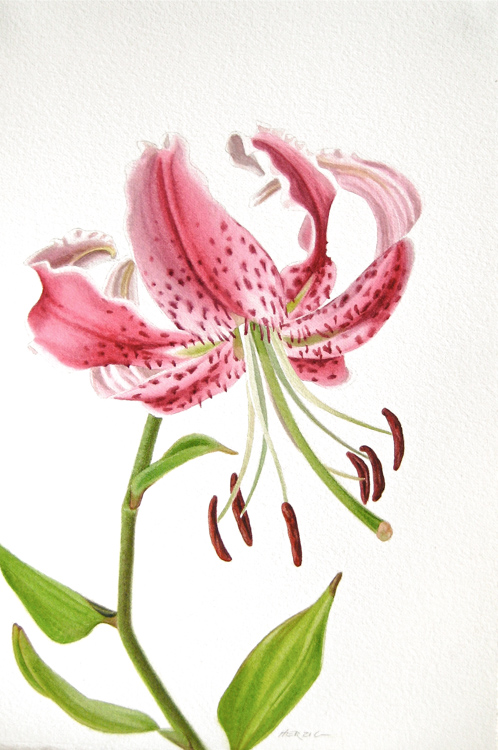 Single Rubrum Lily Original watercolor Image size: 11 1/4 x 7 5/8" Framed size: 20 x 16" Sorry, sold for $550 in white-washed ash frame |
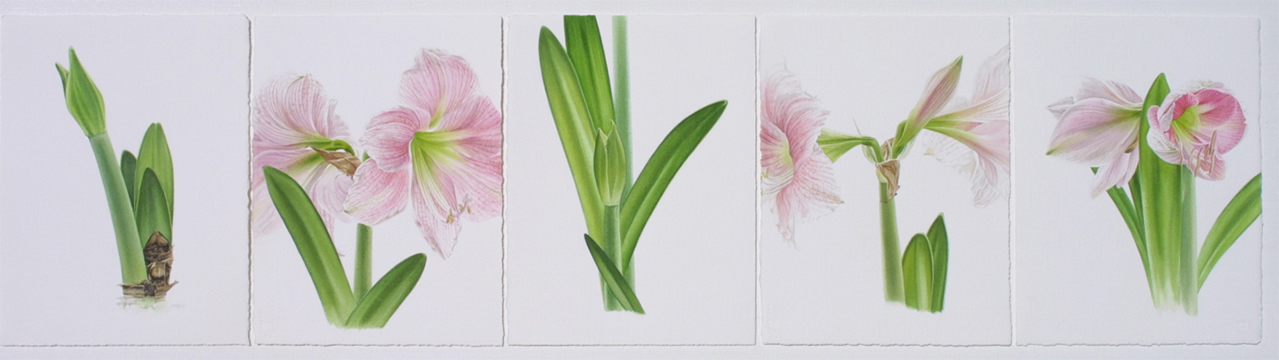 Progressive Bloom (Pink Amaryllis in Five Stages) Five original watercolors Image size: 15 x 11" each panel Framed size: 18 x 60" $2,200 in white-washed ash frame 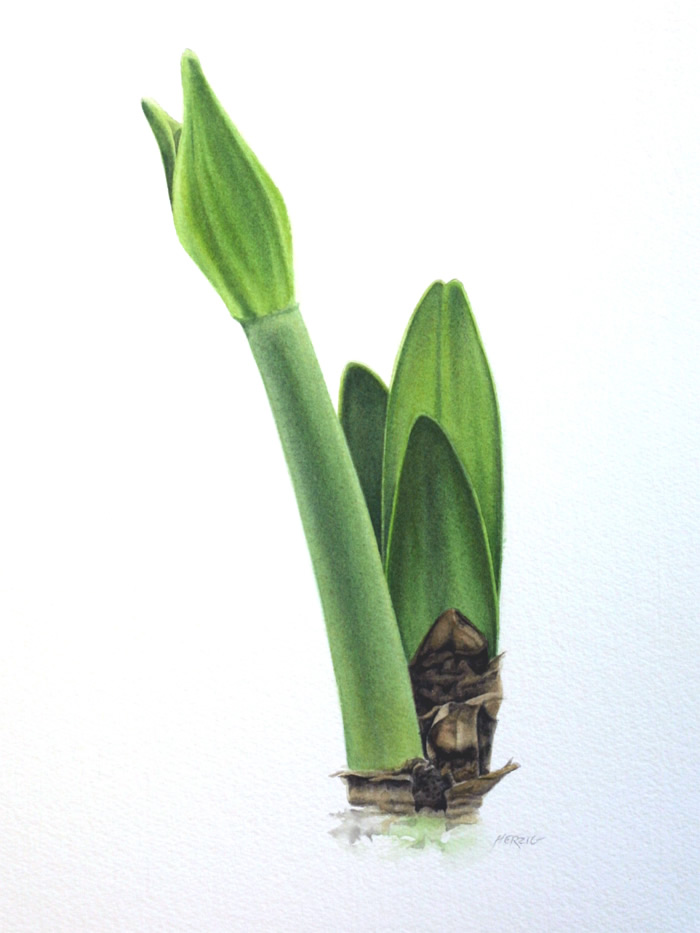
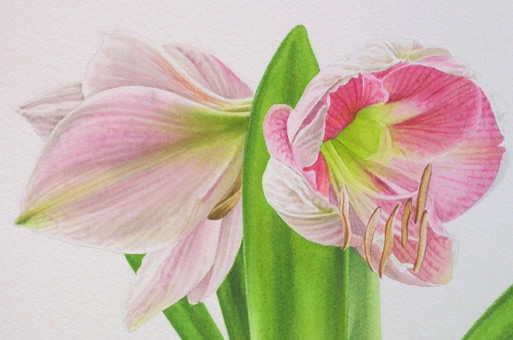 Two detail images from five panel progressive set of watercolors |
|
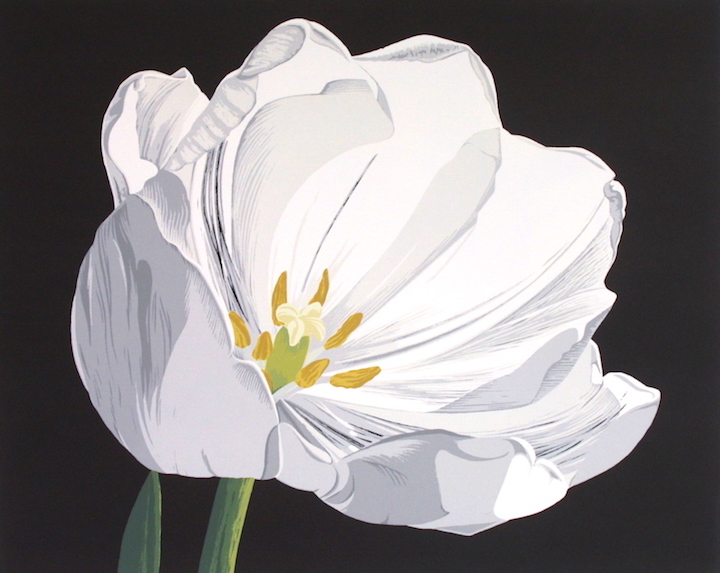 Tulip III Original screen print, Edition size is only 25 Image size: 16 x 20"; Framed size: 20 x 26" $700 framed |
 Lily Afloat Original watercolor Image size: 22 x 30"; Framed size: 32 x 40" $3,600 framed |
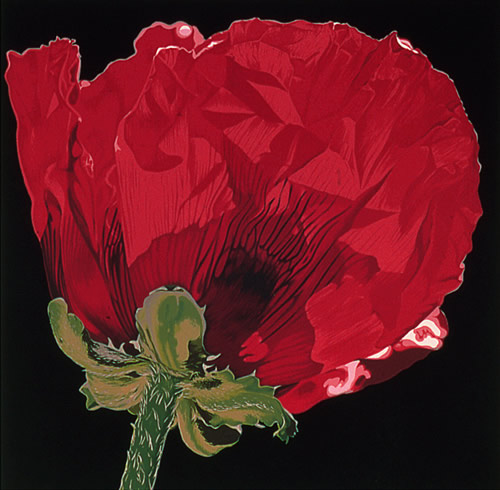 Red Poppy Original screen print Image size: 24 x 24"; Paper size: 26 x 26" Framed size: 33 x 33" $700 framed (Also available $450 unframed) |
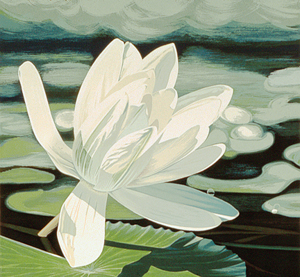 Lotus Original screen print Image size: 22 x 22" Paper size: 26 x 26" $450 unframed (Also framed 32 x 32" for $700) |
The David Herzig artworks shown below have all been sold. If you would like one similar, just let us know! |
|
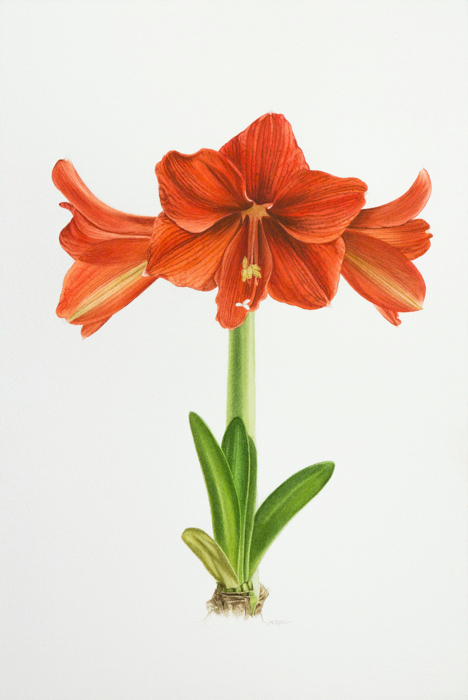 Orange Amaryllis Original watercolor Image size: 22 1/2 x 15" Framed size: 26 x 19" Sorry, sold for $1,100 |
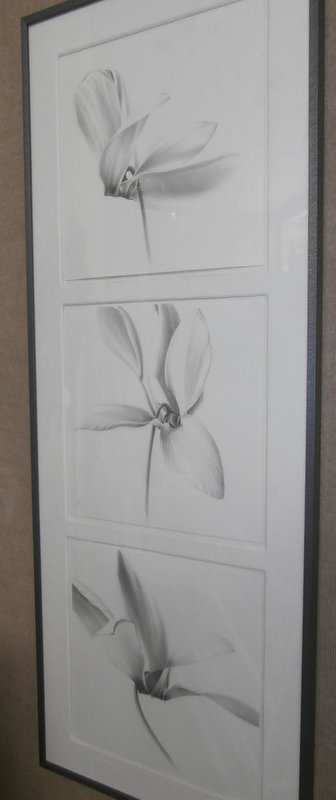 Cyclamen Three original graphite drawings Image size: 13" square each Framed size: 48 x 18 1/2" Sorry, sold for $1,800 in metal frame |
 Amaryllis Blooms and Bud III Original watercolor Image size: 29 1/2 x 41 1/2" Framed size: 35 x 47" Sorry sold for $3,800 in white-washed ash frame |
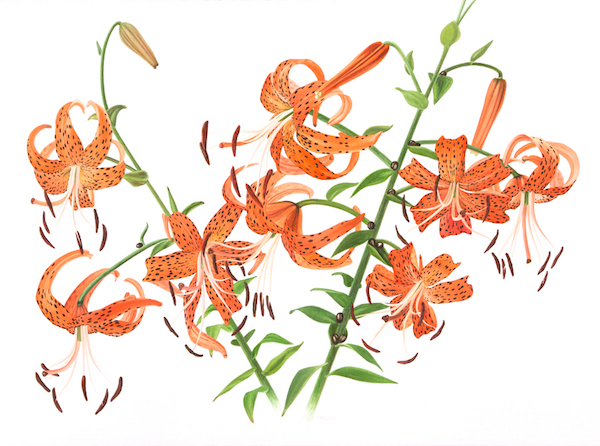 Tiger Lilies Original watercolor Image size: 22 1/2 x 30" Framed size: 28 x 36" Sorry, sold for $2,200 framed |
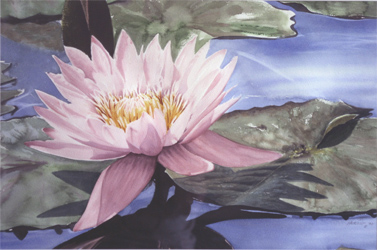 Pink Water lily Original watercolor Image size: 15 x 22" Framed size: 26 x 32" Sorry, sold for $1,100 in blond maple frame |
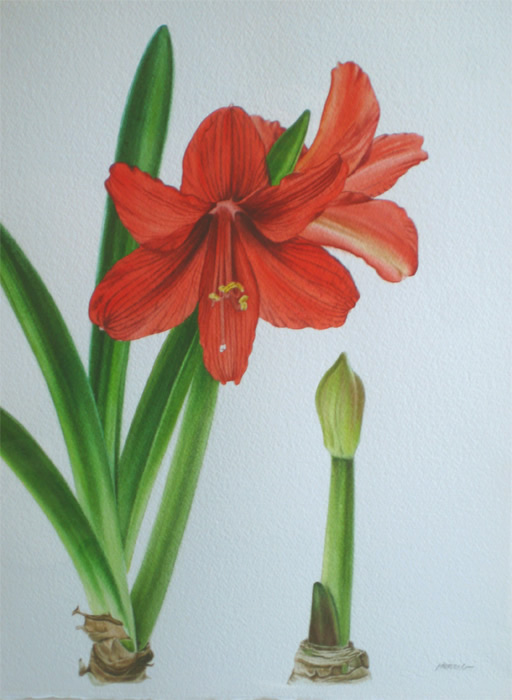 Amaryllis and Bud Original watercolor Image size: 20 x 15" Framed size: 24 x 19" Sorry, sold for $850 in white-washed ash frame |
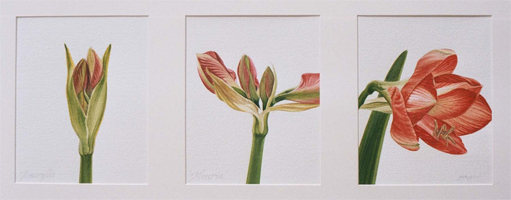 Minerva Amaryllis in Three Stages Three original watercolors Image size: 9 x 7 1/4" each Framed size: 18 x 34" Sorry, sold for $750 in maple frame |
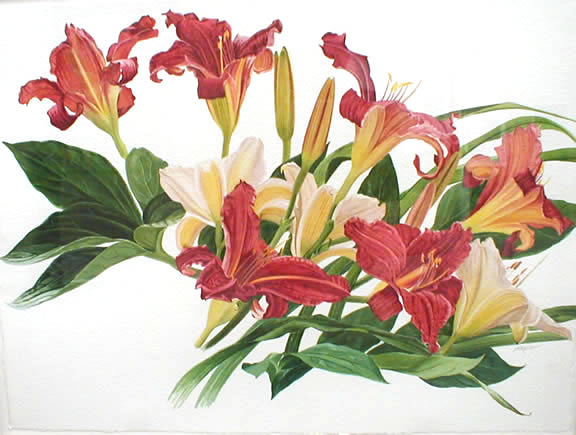 Mixed Day lilies with Peony Leaves Original watercolor Image size: 16 3/4 x 22 1/2" Framed size: 24 x 30" Sorry, sold for $1,500 in solid cherry frame |
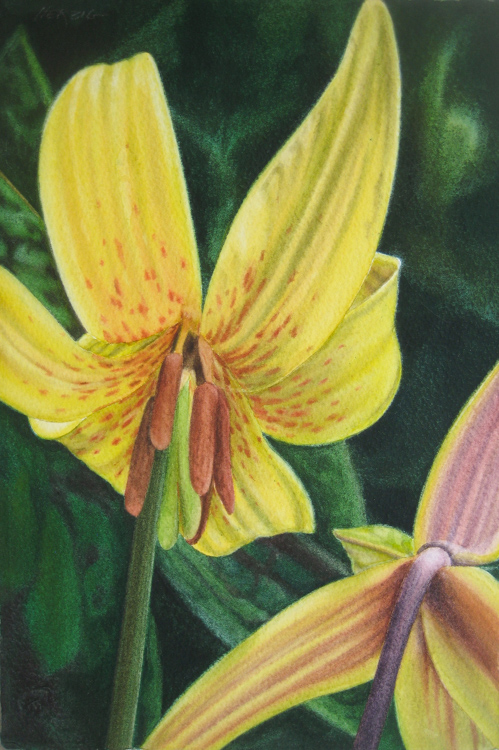 Yellow Trout Lily Original watercolor Image size: 11 1/4 x 7 1/2" Framed size: 20 x 16" Sorry, sold for $380 framed |
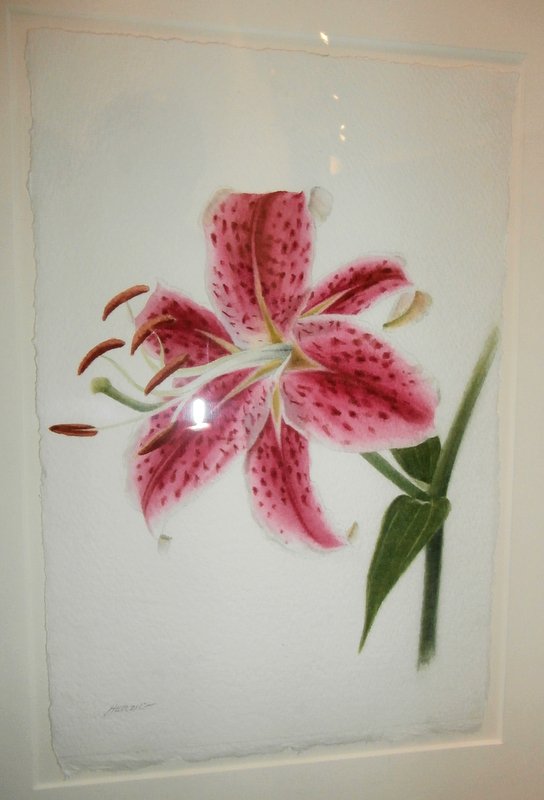 Stargazer Lily Original watercolor Image size: 11 1/4 x 7 1/2" Framed size: 20 x 16" Sorry, sold for $380 framed |
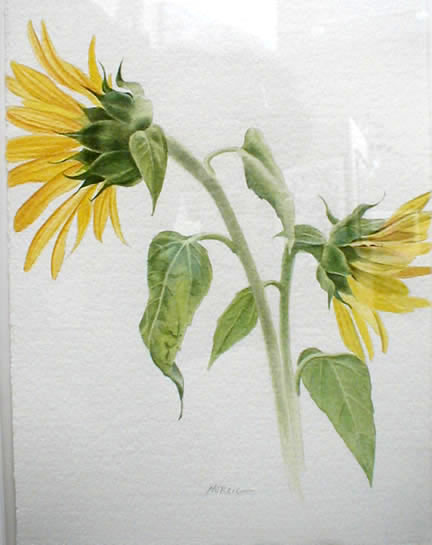 Sunflowers Original watercolor Image size: 11 1/4 x 7 5/8" Framed size: 20 x 16" Sorry, sold for $380 framed |
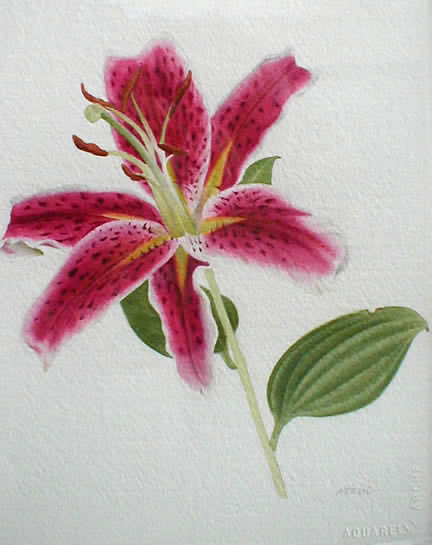 Stargazer Original watercolor Image size: 11 1/4 x 7 5/8" Framed size: 20 x 16" Sorry, sold for $380 framed |
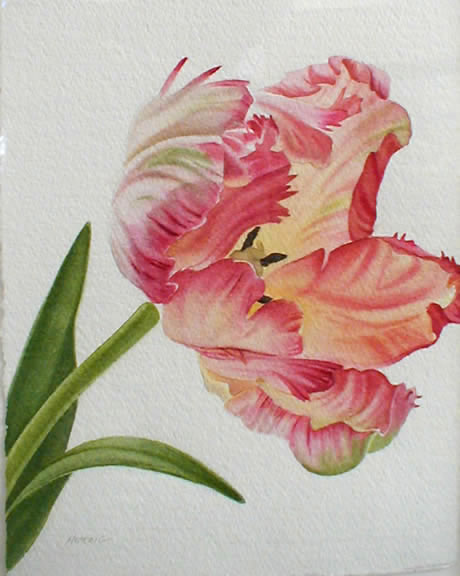 Pink Parrot Tulip Original watercolor Image size: 11 1/4 x 7 5/8" Framed size: 20 x 16" Sorry, sold for $380 framed |
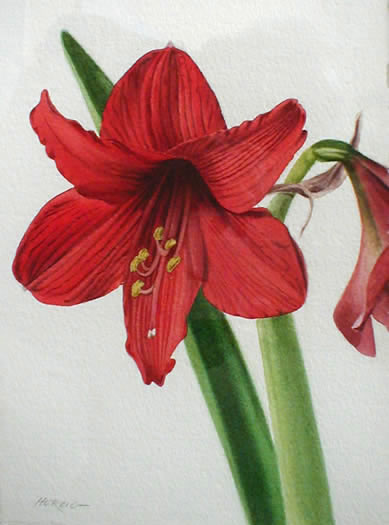 Amaryllis Bloom Original watercolor Image size: 11 1/4 x 7 5/8" Framed size: 20 x 16" Sorry, sold for $380 framed |
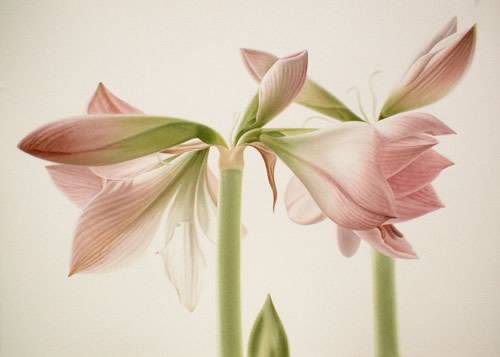 Amaryllis Blooms and Buds Original watercolor Image size: 30 x 41" Framed size: 35 x 46" Sorry, sold for $3,800 framed |
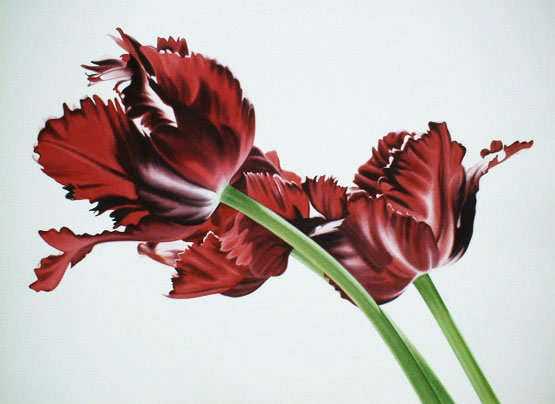 Three Red Parrot Tulips Original watercolor Image size: 30 x 41" Framed size: 35 x 46" Sorry, sold for $3,800 framed |
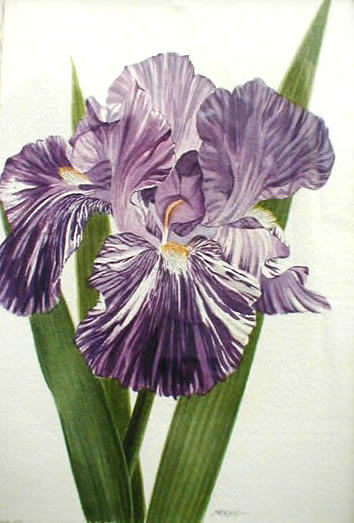 Iris Batik Study Original watercolor Image size: 11 1/8 x 7 1/2" Framed size: 20 x 16" Sorry, sold for $440 framed |
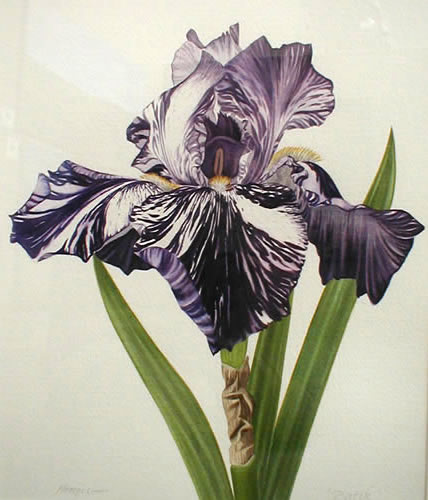 Iris Batik Original watercolor Image size: 19 3/4 x 18" Framed size: 26 x 24" Sorry, sold for $850 |
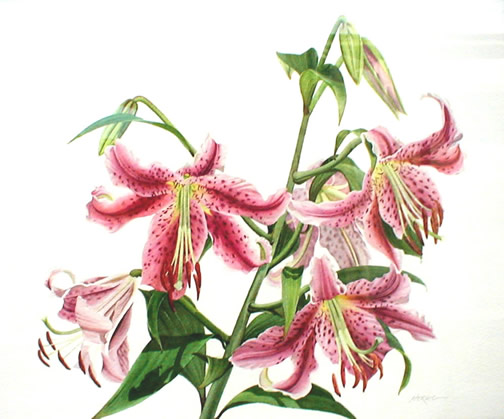 Rubrim Lilies Original watercolor Image size: 24 x 24" Framed size: 33 x 33" Sorry, sold for $1,100 framed |
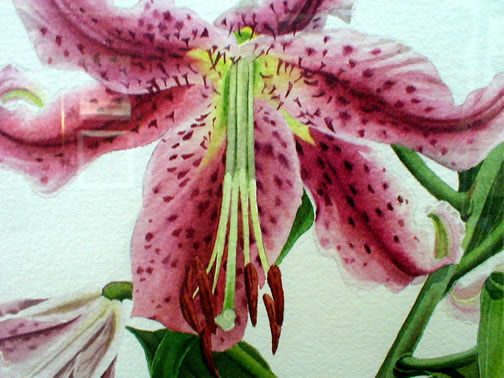 Rubrum Lilies Detail of original watercolor shown at the left |
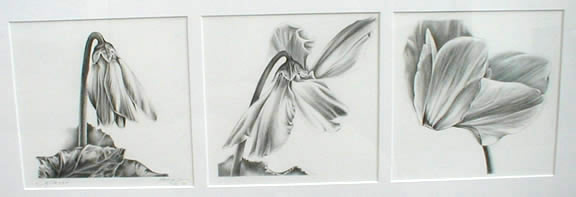 Cyclamen Three original graphite drawings Image sizes: 6 1/2" each Framed size: 15 x 29" Sorry, sold for $450 framed |
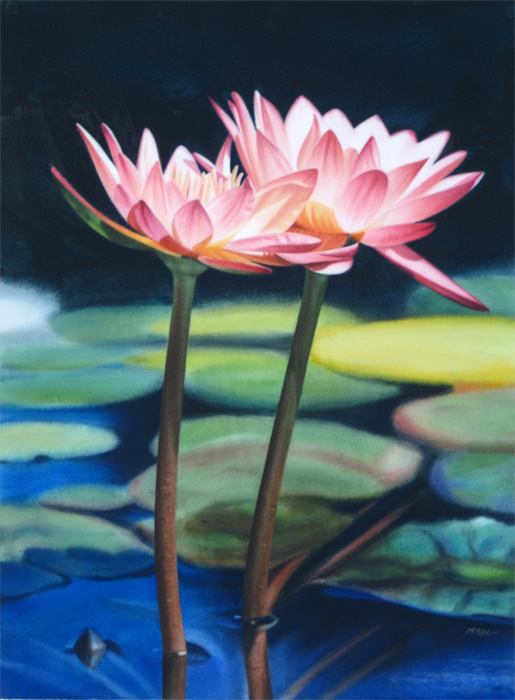 Side by Side Original watercolor of two lotus lilies Image size: 30 x 22" Framed size: 40 x 32" Sorry, sold for $2,800 framed |
|
American
Artist During warmer months, the artist can usually be found jumping in and out of bushes at one of three places (the local arboretum, botanical gardens, or his own backyard) studying the foliage and looking for a unique angle. At times he even stands in the center of a bush to achieve a fresh perspective. "I try to set the stage by taking an unusual viewpoint," he explains; "one that creates a sense of drama and heightens the viewer's awareness of the flower's presence." He uses a surprising composition, strong design, or dramatic lighting to capture the viewer's attention. Numerous field studies become the basis for his over-sized works. "I do field studies as reference material for use in the dead of winter," he says, "when I have forgotten the intense color of a rubrum lily or the shape of a delphinium leaf." Herzig sets up shop with little more than a folding table, chair, and umbrella to shade his work. These small watercolors, which he completes on 300-lb Arches paper, often become finished paintings ranging in size from 7" x 8" to 22" x 30". "I don't do much sketching on the paper before I begin a painting -- just a line here and there for spatial arrangement and to make sure I get everything where I want it," he notes. Although he prefers to work from life, the artist sometimes uses photographs as compositional aids. Herzig employs few tools; not much more than his 1" flat sable and a couple of rounds. Indoors, he typically works wet-in-wet and mixes many colors in puddles. "I try to get color to flow naturally and look like organic forms without actually painting through and spelling it out," he comments.Working exclusively in transparent watercolor, Herzig believes the addition of pastels, inks, and opaque white compromises the integrity of the medium. Using a limited palette, he applies numerous layers to each work and can spend up to 20 hours on a single piece. "I love the push and pull of the work," he says. "What I'm doing is my way of working in sculpture, molding the forms of the flowers." This sense of
three-dimensionality is a distinctive quality in
Herzig's work. In Peony Garden, the artist
developed the effect by first getting down on the ground
at eye level with the blossoms. "I wanted to
immerse myself in the color and fragrance of the peony
garden," he explains. In designing the composition,
Herzig allowed certain parts of the plant to float out
of the picture plane, which invites the viewer into the
form's three-dimensional presence. The addition of
red also helped to establish the composition and mold
the forms with a greater sense of depth. "I used
it not only to frame the focal point but also to
literally point the viewer to it," the artist says. Clearly, his attraction goes deeper than a passing infatuation. "My friends and family will sometimes say, 'Not another flower!' But I tell them to leave me alone -- I'm having a ball!" the artist says. After painting flowers for 10 years, Herzig is inspired by them now more than ever. "How can you exhaust yourself on plant material?" he asks. "You can't. There's no end to the subject. For me, the flower form is worthy of center stage." And so it is. Under his Rubenesque touch, even the common peony stirs our passions. Jeanette Wenig Drake is a writer, artist, and assistant professor of communication at the University of Findlay in Ohio. |
|
TOLEDO MAGAZINE (Excerpted text below)
Botanical illustrations -- where art meets science By Tahree Lane BLADE STAFF WRITER February 18, 2013 Botanical illustration depicts the form, color, and details of plants. It was practiced in ancient India, China, and Egypt where images of plants were carved into pharaohs’ tombs, says Robin Jess, executive director of the American Society of Botanical Artists in New York. Botanical art, expected to be beautiful and technically accurate, is riding a wave of popularity, says Ms. Jess, largely among women artists in the United States, England, Canada, Australia, South Africa, Japan, and South Korea. Concern for the environment and a passion for gardening are fueling the trend. For hundreds of years, the medium was watercolor. These days, graphite, colored pencil, pastels, pen and ink, and oil paints are used. In David Herzig’s living room, water lilies and peachy-gold bearded iris adorn the walls, singing with dramatic colors and larger-than-life size. “It’s more about getting you engulfed in a scene,” says Mr. Herzig, who paints at his kitchen table, overlooking a small ravine in Monclova Township. One of his most popular subjects is a four-part sequential unfolding of the majestic amaryllis, a huge bulb with a fast-growing stalk. “I like to say it’s like painting a moving target,” says Mr. Herzig. He tries to stagger the blooming of 35 amaryllis bulbs for winter painting. His paintings offer more dimension than meets the eye. “I’m trying to depict these things in the round, in a sculptural way.” He studied sculpture and painting at Siena Heights University, but after graduation, gravitated to the watercolors he’d done at Start High School. He owned the Ottawa Gallery in Sylvania from 1988 to 1996, leaving it to paint full time. He did landscapes, and as a homeowner tending to flowers was captivated by plump peonies. He renders orchids, oriental lilies, cyclamen, and “whatever I find in the garden, whatever I stumble across that catches my fancy. It has to strike me as being graceful and bold.” In 2001, he exhibited at the Hunt Institute for Botanical Documentation, which owns 30,000 books dating to the 1400s and 30,000 original paintings, mostly 20th-century watercolors. The Hunt, at Carnegie Mellon University in Pittsburgh, purchased his pure-white single bearded iris on a deep green background. “It was more of a loose representation than a strict botanical study.” |
Saper Galleries....where
excellence is the
standard!




433 Albert Avenue East Lansing, Michigan 48823 USA (517)351-0815